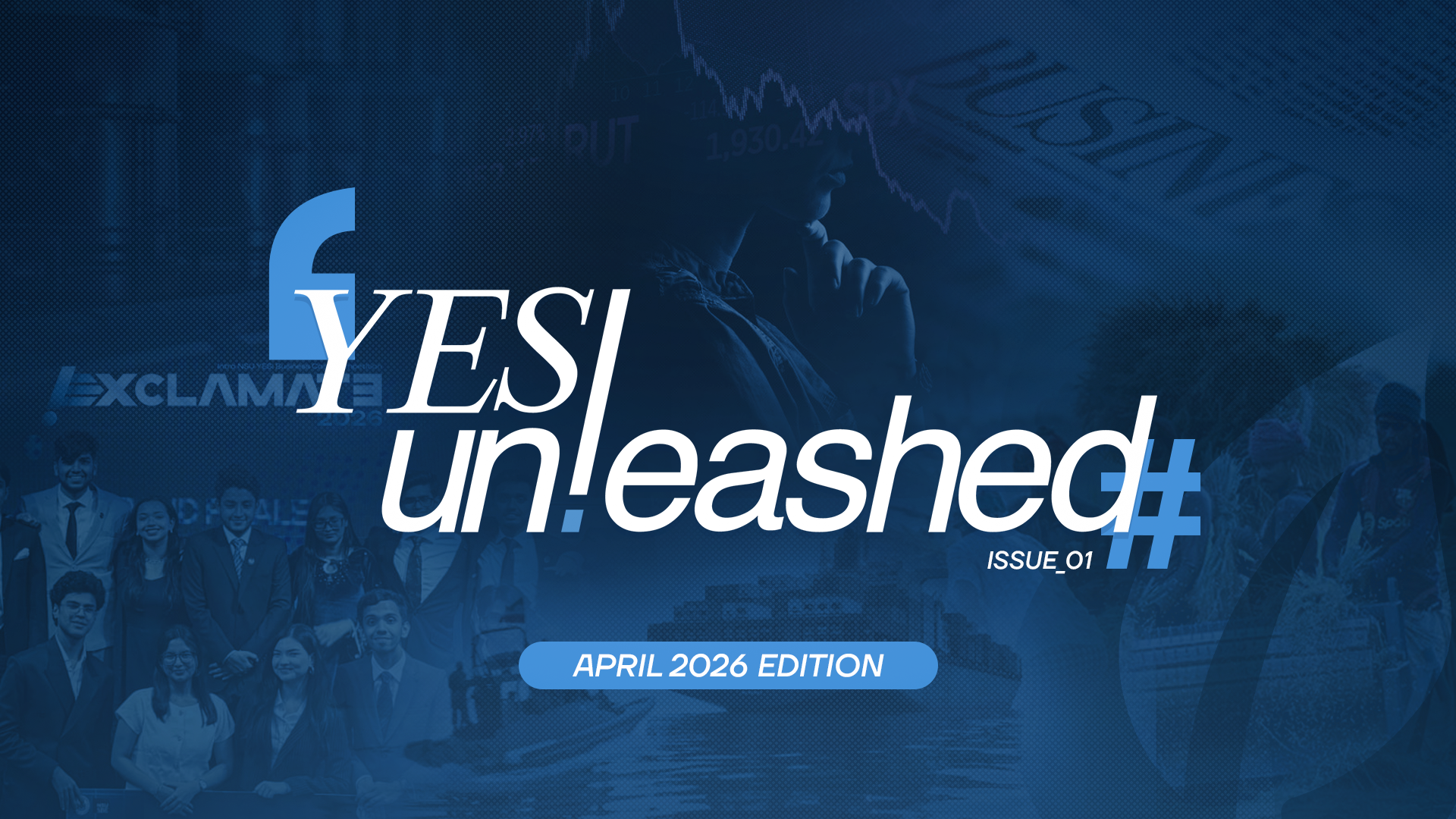
NSU YES! UNLEASHED is the official monthly newsletter published by the North South University Young Entrepreneurs Society (NSU YES!), offering sharp insights on ideas and businesses that bring a change while also offering behind the scene coverage of our landmark events. This publication caters candid stories from our members, insights into our alumni-led ventures, and a closer look at how the leaders of tomorrow are forged in excellence.
President’s Note
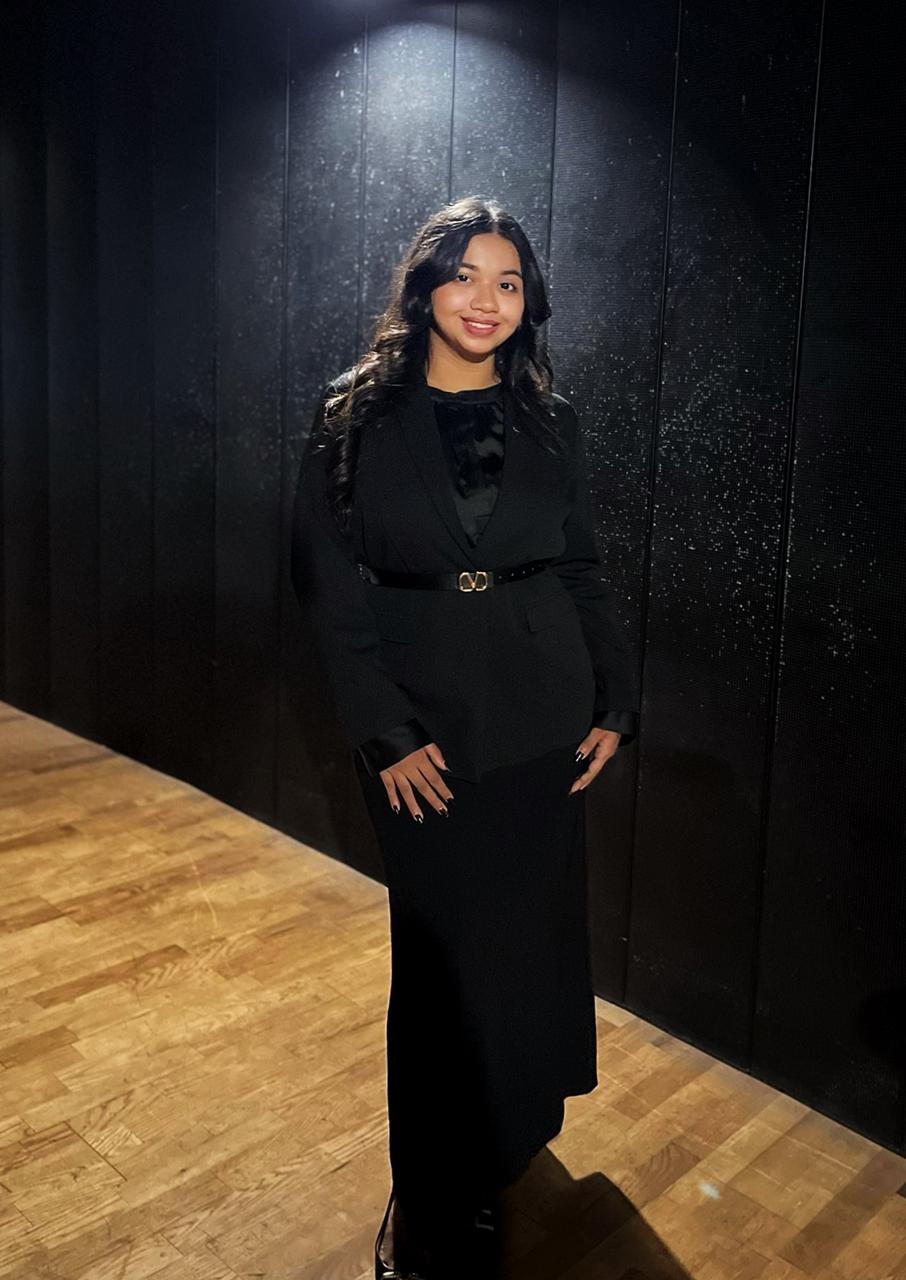
Dear readers,
As we welcome the May edition of YES! Unleashed, we reflect on a month centered around appreciation, resilience, and the people whose efforts shape the world around us every single day. Inspired by the spirit of May Day, this edition is dedicated to recognizing the value of labour not only in workplaces and industries, but also within our personal ambitions, creative journeys, and everyday struggles.
This month’s newsletter brings together conversations that matter. From exploring the true significance of May Day, to celebrating teamwork and sportsmanship through the NSU YES! Intra Futsal Tournament, we continue to highlight the vibrant spirit of our community. Alongside this, we dive into thought-provoking discussions on whether founders today are repackaging old ideas into new ventures, and shed light on an issue many young people silently battle the growing burnout culture surrounding mental health and productivity.
We are also incredibly proud to feature Shuttle, an inspiring venture founded by one of our alumni, showcasing how innovation and perseverance can create meaningful impact beyond university life.
At YES!, we believe growth is not only measured by achievements, but also by awareness, empathy, and the ability to create meaningful conversations. I hope this edition encourages you to appreciate the hard work behind every success, reflect on the pressures of modern hustle culture, and continue striving for balance while pursuing your goals.
Thank you for being part of this journey with us. Happy reading!
Zarin Tasnim Mauli Rahman
President
NSU YES!
Where Ideas, Impact & Community Collide
This edition of YES! Unleashed explores the people, perspectives, and conversations shaping our community this month. From labor rights and workplace well-being to innovation culture and the moments that strengthen our bonds beyond work, this issue captures both the intellectual and human side of YES!. Dive into stories that challenge perspectives, celebrate connection, and reflect the evolving spirit of our generation.
The Unfinished March
From Haymarket to the Labor Act 2026
A reflective piece tracing the journey of global labor rights from the 1886 Haymarket movement to Bangladesh’s recent Labor Act 2026 reforms. The article explores the ILO’s growing focus on mental well-being, safer work environments, and the ongoing struggle for dignity, awareness, and fairness for workers worldwide.
Annual YESers Futsal
More Than Just a Tournament
An inside look into YES!’s annual futsal tradition where members step away from deadlines and reconnect through recreation, teamwork, and shared memories. From spirited auctions to thrilling finals, the event highlights camaraderie, inclusivity, and the relationships that transform the club into a true safe space.
Mental Burnout: A Design Flaw, Not a Badge
Rethinking Hustle Culture & Workplace Exhaustion
A powerful commentary on burnout culture and the dangerous normalization of overwork. Backed by research and real-world workplace patterns, the piece argues that burnout is not personal weakness but a systemic issue created by environments that prioritize constant productivity over human sustainability.
Are Founders Leading Innovation or Repackaging Old Ideas?
The Fine Line Between Reinvention & Trend-Chasing
This article questions whether modern startups are genuinely innovating or simply layering buzzwords onto existing concepts. Through examples from global startup culture, it examines how meaningful innovation depends not on novelty alone, but on solving real problems within the right context.
Carpooling towards a change: Shuttle - The Transformation in Urban Mobility for Women in Bangladesh
Rethinking Hustle Culture & Workplace Exhaustion
A powerful commentary on burnout culture and the dangerous normalization of overwork. Backed by research and real-world workplace patterns, the piece argues that burnout is not personal weakness but a systemic issue created by environments that prioritize constant productivity over human sustainability.
The Unfinished March
From Haymarket to the Labor Act 2026: A look at the global struggle, the ILO’s psychological theme, and Bangladesh’s path forward to safer, fairer work
The first of May has always carried a quiet weight, so heavy that it reminds us we stand on the foundation of humanity and its efforts to make a living. It is the day we remember that every building stands, every skyscraper boasts, and every meal is served because someone, somewhere, showed up to work.
The history of May Day stands as an iconic moment, as thousands of workers across Chicago took to the streets to demand an eight-hour workday on May 4, 1886. As workers protested peacefully to change the norm of working twelve hours under hazardous conditions, the situation escalated to violence when a bomb was thrown at police during a rally, and it was followed by gunfire and the deaths of innocents. As a result, in 1899, the Second International formally declared May 1 as International Workers’ Day to honor those who fought for basic labor rights.
For most of its existence, Labor Day has always been about visible wounds, the form that took place in factories, chemical burns or broken bones. But this year, the International Labor Organization turned the heads of many as they focused on the struggles that can only be felt but never seen. This year’s theme places mental well-being at the center of the conversation, highlighting the risk that can be seen in almost any high-performing organization, from stress and burnout to anxiety and fatigue. The ILO is therefore urging governments to design a framework that reduces the overbearing workload, prevents discrimination, and supports a healthier work-life balance. Productivity cannot come at the cost of human well-being.
For Bangladesh, the national theme was “সুস্থ শ্রমিক, কর্মঠ হাত; আসবে এবার নব প্রভাত” meaning ‘“Healthy Workers, Productive Hands, A New Dawn Awaits”, that places workers’ well- being at the center of progress. In light of the theme, Bangladesh enacted the Labor Act 2026, a landmark reform amending 93 sections of the country’s labor law. Changes included allowing trade unions to be formed with just 20 workers, replacing the 20% threshold that made forming unions difficult for many. It made blacklisting workers entirely illegal,
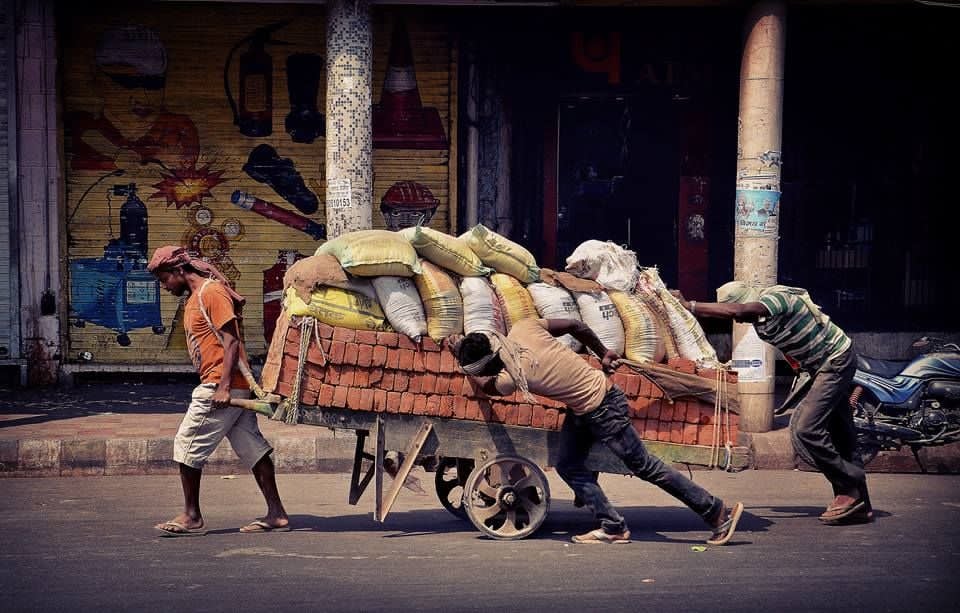
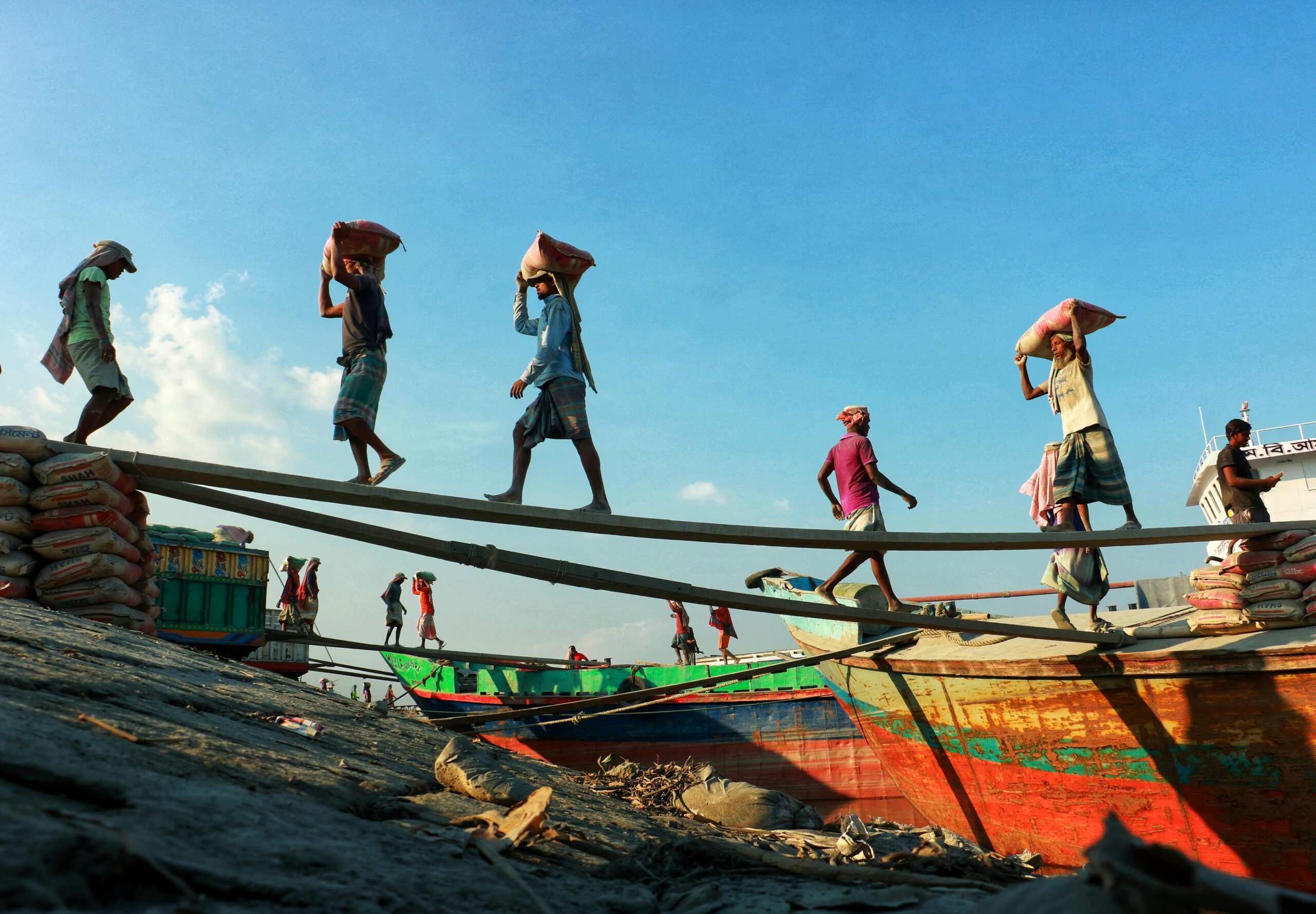
and maternity leave has been extended to 120 days with pay, a major step for women’s workplace rights. Larger employers have been ordered to establish provident funds, changing old customs and pushing for a better, more secure future for laborers, with revised rules and procedures for termination and resignation.
The foundation has been laid, the laws rewritten, and the conventions signed. What awaits now is the rising awareness of the workers, who must know what has been created for them so that they are not deprived of any benefits. A new dawn will never come for the laborers who won’t know what to fight with when the darkness of the night comes. Therefore, the march for laborers that started in 1886 in Chicago continues in Bangladesh, as workers who rise before dawn, piece together a living from overtime, and wonder whether their family will eat the next day, feels deprived of the promises of May Day which may have not yet been fulfilled for them.
- Written by
- Fahmid Rafid
Annual YESers Futsal
A day of recreation where members take a fresh breath, connect and re-energise
The doorways leading to clubroom 103 usually or rather, mostly echoes with either brainstorming sessions, executing ideas or meeting deadlines. But, for a particular day – every year, the members pause while the energy is shifted from echelons to recreation.
What can now be coined a tradition is the annual YESers Futsal tournament, an intra competition where each Executive Body member of the club has a team of their own. The idea and message behind this initiative? It lets our people breathe, laugh and bond outside of the club’s hectic yet eventful schedule all year around. The true magic of the tournament begins while all are seated inside a room and the official auction for the players begins. For a moment, the atmosphere turns chaotic yet the warmest of memories are made when the bids are placed and colleagues turn to outbidding the other with the singular purpose of having their own dream team. As the auction ends, the head-to-head is then on the field, where friends turn opponents and members turn teammates.
With the very first kick-off in motion, there is no hierarchy but teammates who fight for their own and a connection is forged even outside the decorum within a senior and their underlings. Members play shoulder to shoulder, celebrating even the smallest of wins while laughing away the biggest of blunders made – for this day is when all is kept aside and it’s all fun and games. One wouldn’t be wrong to say that it’s not just about the title to be won but the energy that means everything.
This year, the female category is something worth mentioning. The remarkable participation and the spirit they brought along, automatically uplifted the entire gallery with cheers all around and celebrations long before any scores were made. This here also brings a message of YES! and its members fostering the culture of inclusionship, ambition and the sense of shared ownership which extends well beyond the spheres of professional structurism.
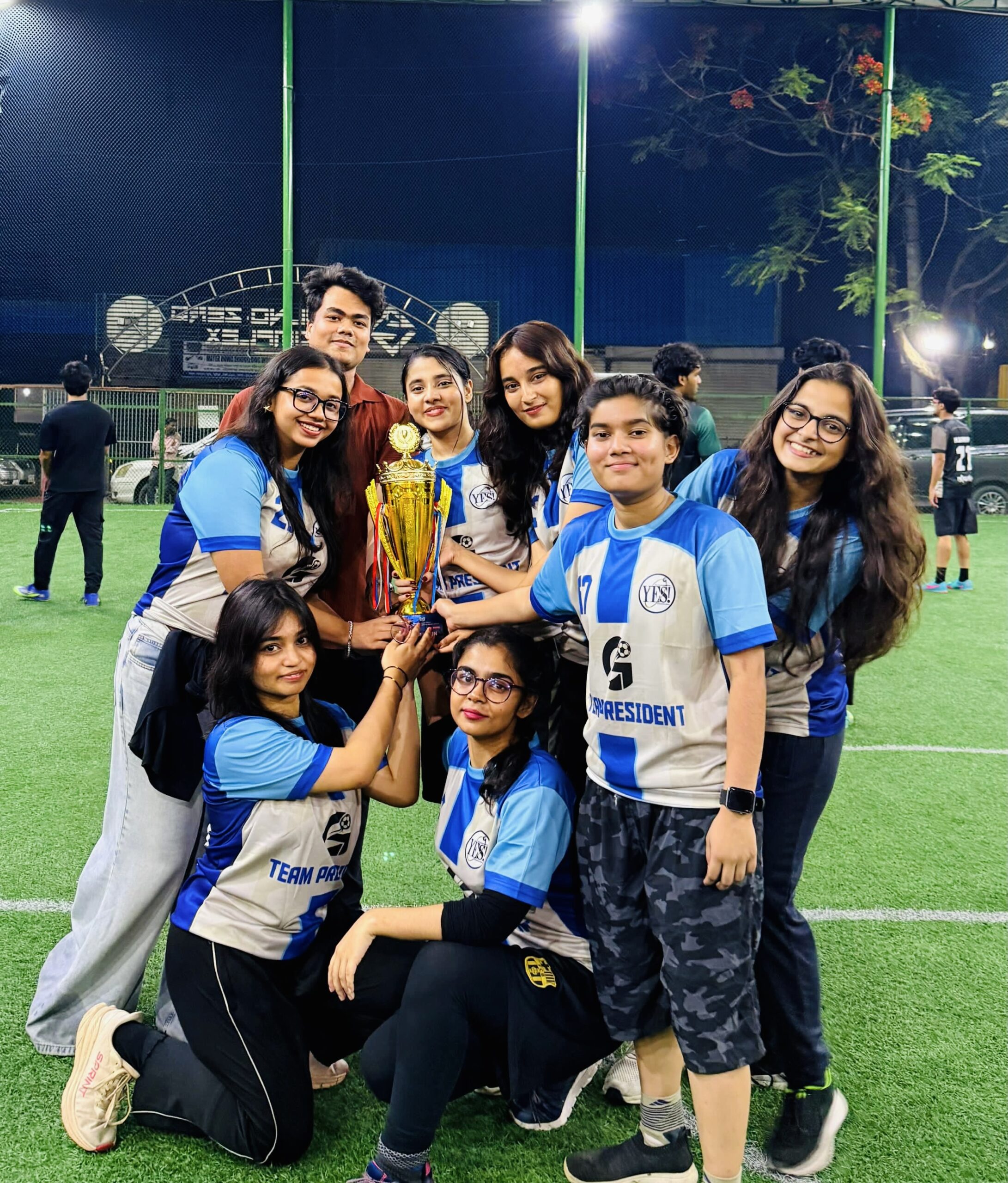
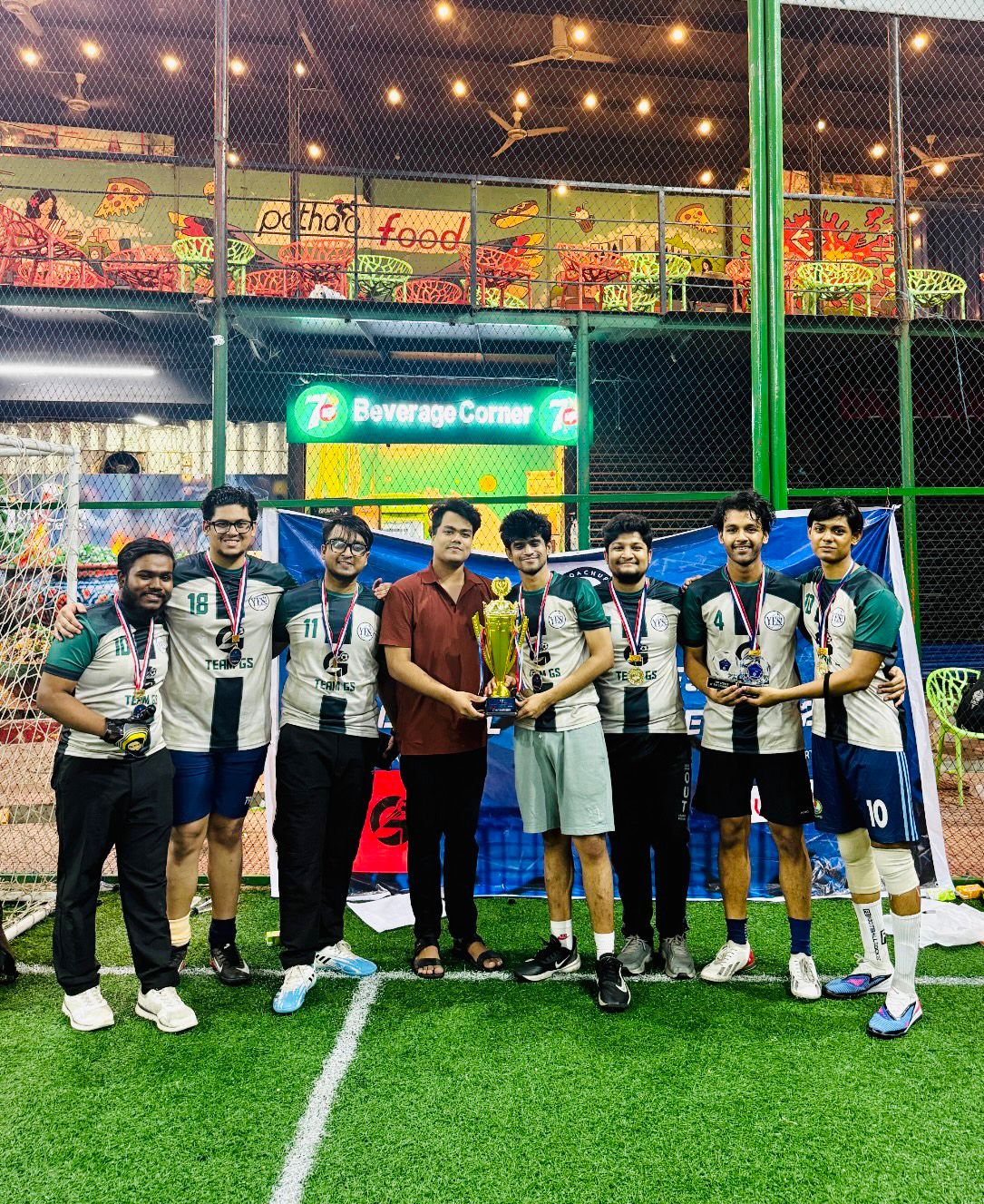
As the matches progressed, the competition heightened, having two teams, the GS and the Treasurer’s facing off in the finale. With tensions rising and the gallery outpouring in cheers, team GS finally made it through taking the championship home! And the celebration that followed? It’s as if the journey was never towards the trophy but instead the memories that it created – the bruised knees, constant banters and the last moment comebacks made.
Days like these are when we are reminded of why YES! matters beyond the professional mandates it adheres itself to. When members share experiences well beyond the usual routine, it quietly deepens the trust one has for the other forming bonds and the club slowly transforms from just an “organisation” to what feels like our safe space. And to the members who made the day as eventful as it was, here’s to more of this where we live for the moment and play it off just as hard as we work to pull it all off!
- Written by
- Wasek Hossain
Mental Burnout: A Design Flaw, Not a Badge
What we call ‘hustle’ is merely the slow normalization of a system that mistakes depletion for dedication.
You know the script. Wake up. Scan Slack before daylight. Dispatch emails during dinner. Feel culpable for sleeping eight hours. Label it “grinding.” Label it “hustle.” Label it whatever you want. It’s eroding you from within.
Here’s a statistic that should unsettle you more than any startup failure. According to a 2024 Gallup survey, 76% of employees encounter burnout on the job at least intermittently. Nearly 30% report feeling burned out “very often” or “always.” That is not a difficult week. That is a systemic disintegration camouflaged as aspiration.
We have been indoctrinated with a fallacy. The fallacy posits that exhaustion is a credential of honor. The fallacy asserts that rest is reserved for those lacking sufficient drive. But here is what the fallacy conceals: burnout is not a personal deficiency. It is a structural flaw in a culture that conflates velocity with progress. According to the World Health Organization, burnout is now an official medical diagnosis; not a frailty, but an occupational phenomenon defined by three criteria: energy depletion, psychological detachment from one’s work and diminished professional efficacy.

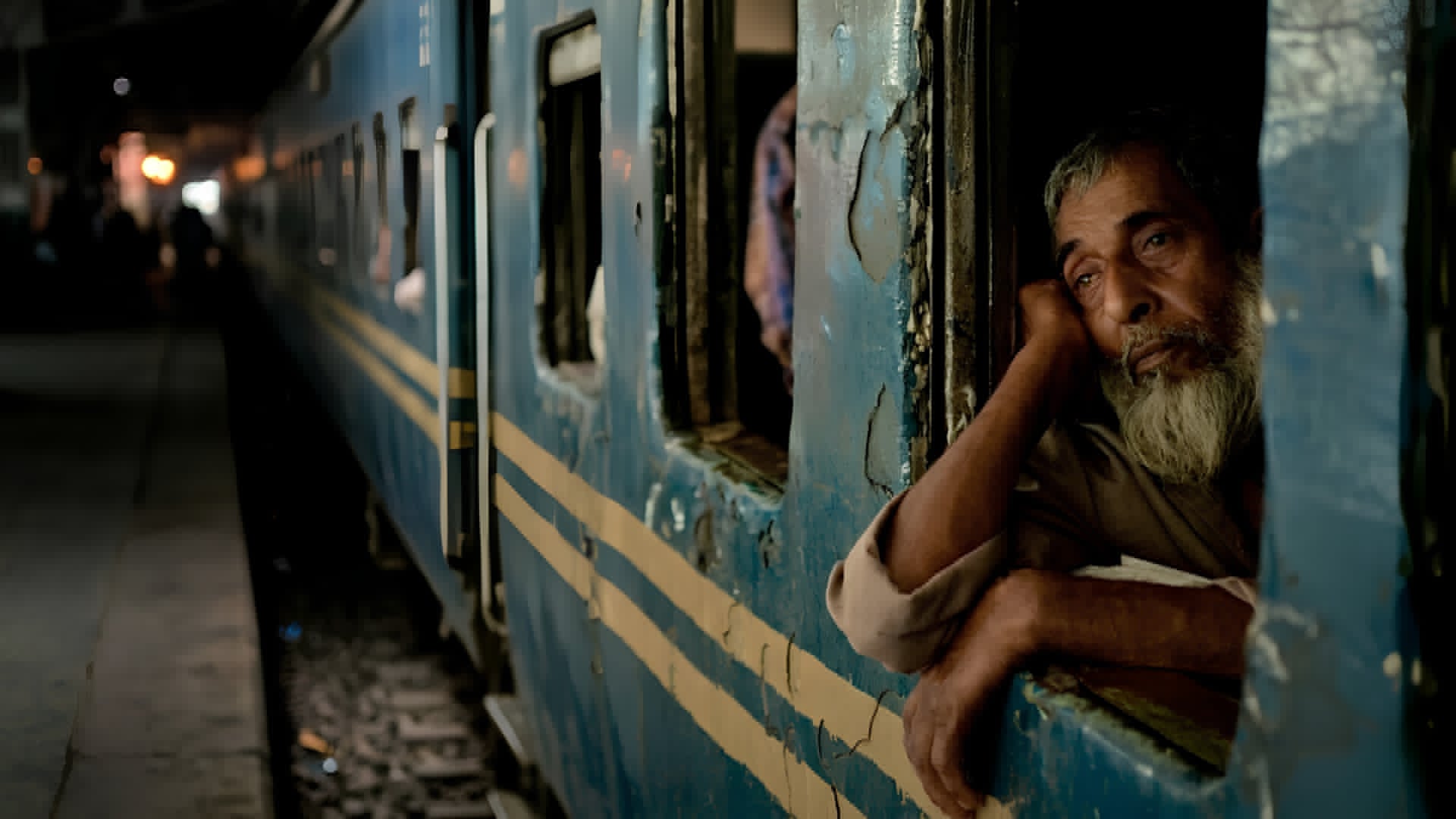
Yet here is the uncomfortable question that remains unasked in co-working spaces at 10 PM. If everyone is deteriorating, is the problem genuinely us? Stanford researchers have determined that workplace burnout contributes to over 120,000 fatalities annually and nearly $190 billion in healthcare expenditures. That is not a mental health predicament. That is an industrial catastrophe unfolding in slow motion.
The most insidious aspect? Burnout does not announce its arrival. It first murmurs: “Just finalize this one task.” Then it escalates: “Why can you no longer keep pace?” And eventually, you find yourself staring at a blinking cursor, incapable of formulating a sentence you have composed a hundred times before. That is not indolence. That is your cerebrum shutting down a mechanism that forgot how to power off.
So here is the genuine inquiry for every founder, employee, and human being pursuing this. Are you architecting a life or traversing a treadmill that leads nowhere? The hustle will not lament your absence. The algorithm will not express gratitude. But the tranquil iteration of you, the one who sleeps, pauses and exhales, might just endure long enough to recognize: you were never intended to sustain this velocity.
- Written by
- Fahim Foysal
Are Founders Leading Innovation or Repackaging Old Ideas?
The question is not whether ideas are new. It is whether the problem being solved ever truly needed solving.
You’ve seen it before. Another “AI-powered” app. Another “platform-enabled” marketplace. Another pitch deck promising to “disrupt.” At what point does innovation stop being new, and start being recycled? The uncomfortable question left unspoken is: are founders truly innovating, or just rebranding what already exists?
From food delivery to fintech, many ventures today are not building from scratch but building on top. Ride-sharing didn’t invent transport; it optimised access. Marketplaces didn’t create demand; they reorganised it. The playbook is clear: take an existing idea, layer technology and scale it fast. According to CB Insights, over 35% of startups fail due to lack of market need, suggesting many “innovations” are iterations nobody asked for. But that stat alone doesn’t prove repackaging is bad. It proves what chasing novelty without necessity is.
Calling this trend “lazy” misses the point. True innovation isn’t always about invention; it’s often about reinvention. Look at companies like Airbnb or Uber. They didn’t invent homes or cars, they reinvented access. The real problem? Today’s founders often stop at layering trendy tech: blockchain, AI, Web3 onto existing models without asking: does this actually change behaviour? Most of the time, no.
The true divide isn’t in ideas, it’s in how deeply founders are willing to rethink them. Many founders are quick to adopt emerging technologies like AI or blockchain, but adding a technological layer doesn’t automatically create value. When innovation becomes synonymous with trend-chasing, the result is a wave of startups that look impressive on the surface but struggle to sustain relevance.
This doesn’t mean rebranding is inherently weak. In fact, thoughtful reinvention – adapting ideas to new contexts, cultures, or technologies, can be powerful. Ultimately, the defining question arises: are founders solving real friction, or chasing what’s fundable? What succeeds in Silicon Valley often fails in Dhaka. A startup that claims to “reinvent” ride-sharing for Jakarta might just be replaying a problem already solved by Pathao in Dhaka. Context isn’t a footnote, it’s the whole story.
Innovation isn’t about how new something sounds. It’s about whether it changes something that matters. So here’s the real question every founder should answer before writing that ‘AI-powered’ tagline: if you stripped the buzzwords away, would anyone still need what you’re building?
- Written by
- Syeda Amrin Haider
Carpooling towards a change: Shuttle - The Transformation in Urban Mobility for Women in Bangladesh
When a daily inconvenience turns into an idea
The chaos of Dhaka does not slow down for any of us, with shoves and pushes often plunging on the women of this city. In the metropolis of twenty million dwellers, female commuters are left to navigate through a public transport system which was never designed with their accessibility in mind. Buses are always overcrowded and harassment as if it is just routine and the alternatives also always offer little to no sense of protection with ride-sharing apps almost always feeling as if it’s financially out of reach. For years, this was never treated as a problem but as if it was an invisible sense of tax on the women who chose to participate and pursue a life outside of what had been the society’s shackle of boundaries. Team Shuttle came along to challenge just that.
Founded in 2018 by Jawwad Jahangir, Reyasat Chowdhury and Shah Sufian – the startup entered the market with a rather price target and a deliberate intervention – a woman only app-based carpooling service which offered not just the means of transportation but the sense of protection, comfort and accessibility in terms of financial reasoning. Shuttle’s presence and their concept served as a subtle message in the market – “convenience is not luxury, comfort is necessary.”
And the women? They responded instantly, with over 30,000 registrations on the platform the services have now crossed over a million in terms of total trips availed. From students to the corporate, Shuttle answered a question many weren’t asking, how technology can bring convenience and the necessity of safety and convenience without having to pay sky-rocketed prices.


What makes Shuttle a market mover is that it never treated the necessities as a premium service to be offered and the idea to design a women-first product also helped normalise the concept of infrastructure being established while keeping the convenience of women in perspective.
Since its launch in 2018, Shuttle has now broadened its services to unisex carpooling services and corporate/B2B services, having partnerships with multiple organisations. Shuttles unique position in the market helped garner them investors from South Asia Tech and Accelerating Asia while also securing local funds. Founders are currently recognised on the Forbes’s 30 under 30 Asia list and the company itself is now eyeing opportunities to go global while addressing to further expand into the local market of Bangladesh which is estimated to be of $13.5 Billion.
The effect becomes clearer over time. When financing, inputs, and market access are aligned, outcomes begin to stabilize. Farmers are not just producing more; they are operating with greater predictability. The process, which once relied heavily on external uncertainty, becomes more structured without losing its flexibility.
This is where the shift becomes meaningful.
iFarmer does not redefine farming itself, but it reorganises the conditions around it. What was once fragmented, loans from one source, inputs from another, sales through intermediaries begins to function as a connected system. In 2026, iFarmer further strengthened this model by securing USD 1.5 million in its latest fund from Switzerland-based Symbiotics to reinforce the agricultural value chain.
And in that shift, the value is not just efficiency. It is coherence.
- Written by
- Wasek Hossain
- Editor
- Prionty Tasnim
- Nailat Kabir
- Rodela Nawar Matin
- Ariful Islam Mohsin
- Labiba Mustafa Khan
- Zarin Tasnim Mauli Rahman
Latest Editions
Here is a collection of all our previous monthly editions for you to read through.