

NSU YES! UNLEASHED is the official monthly newsletter published by the North South University Young Entrepreneurs Society (NSU YES!), offering sharp insights on ideas and businesses that bring a change while also offering behind the scene coverage of our landmark events. This publication caters candid stories from our members, insights into our alumni-led ventures, and a closer look at how the leaders of tomorrow are forged in excellence.
President’s Note

Welcome to the very first edition of the YES! Newsletter, a space we’ve been excited to finally bring to life.
At YES!, there is always something happening: brainstorming, networking, and big executions. Somewhere between all of that, we realized something important, moments move fast, and stories often get left behind. This newsletter was created to change that. We wanted a space that keeps everyone connected to the initiatives, conversations, and energy that shape YES! beyond just event posters and announcements. At its core, this first edition is about growth from the root, where ideas begin quietly, where pressure slowly shapes ambition, and where future entrepreneurs take their first real steps. It’s about the unseen beginnings that often lead to bigger impacts.
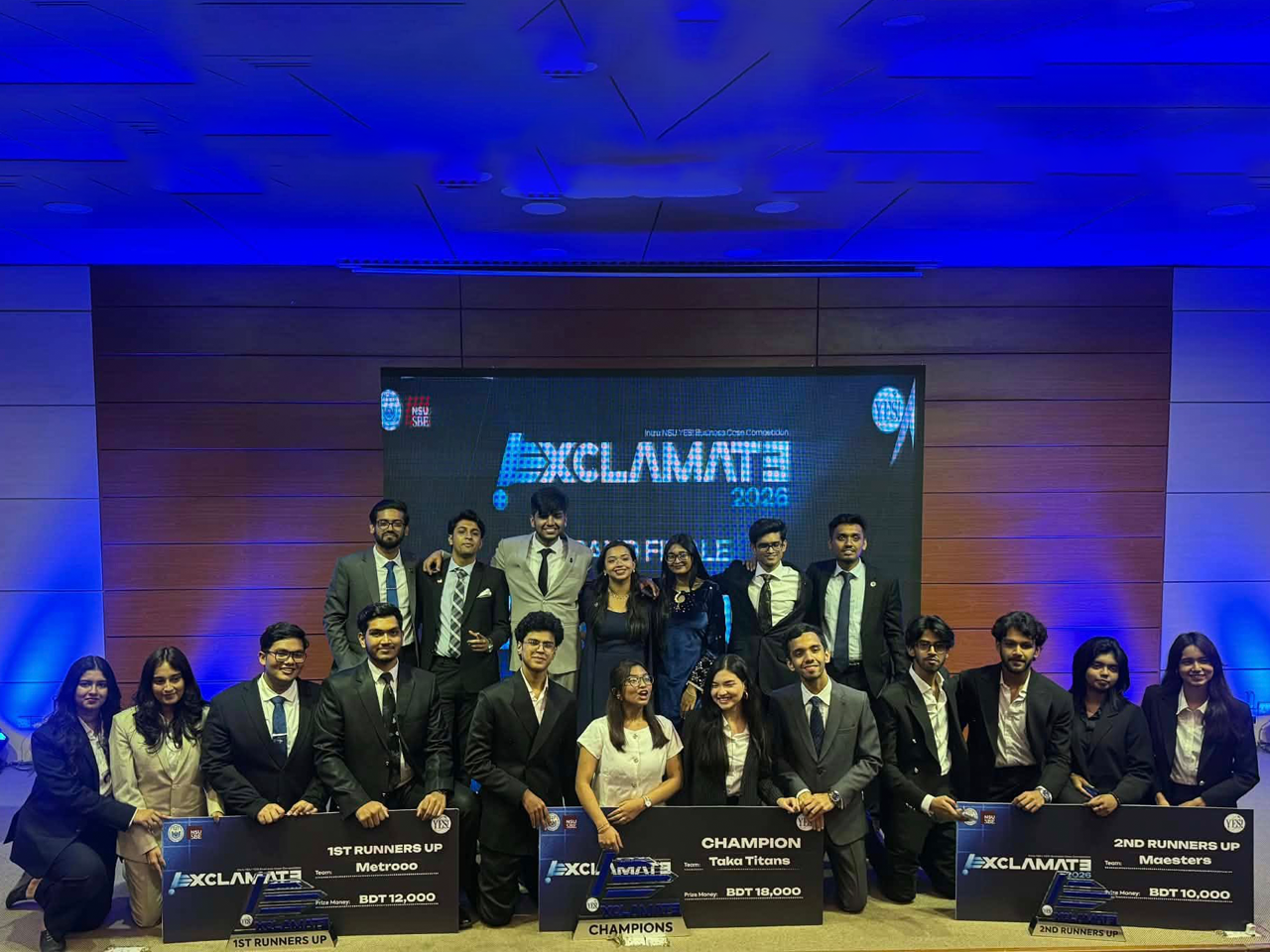
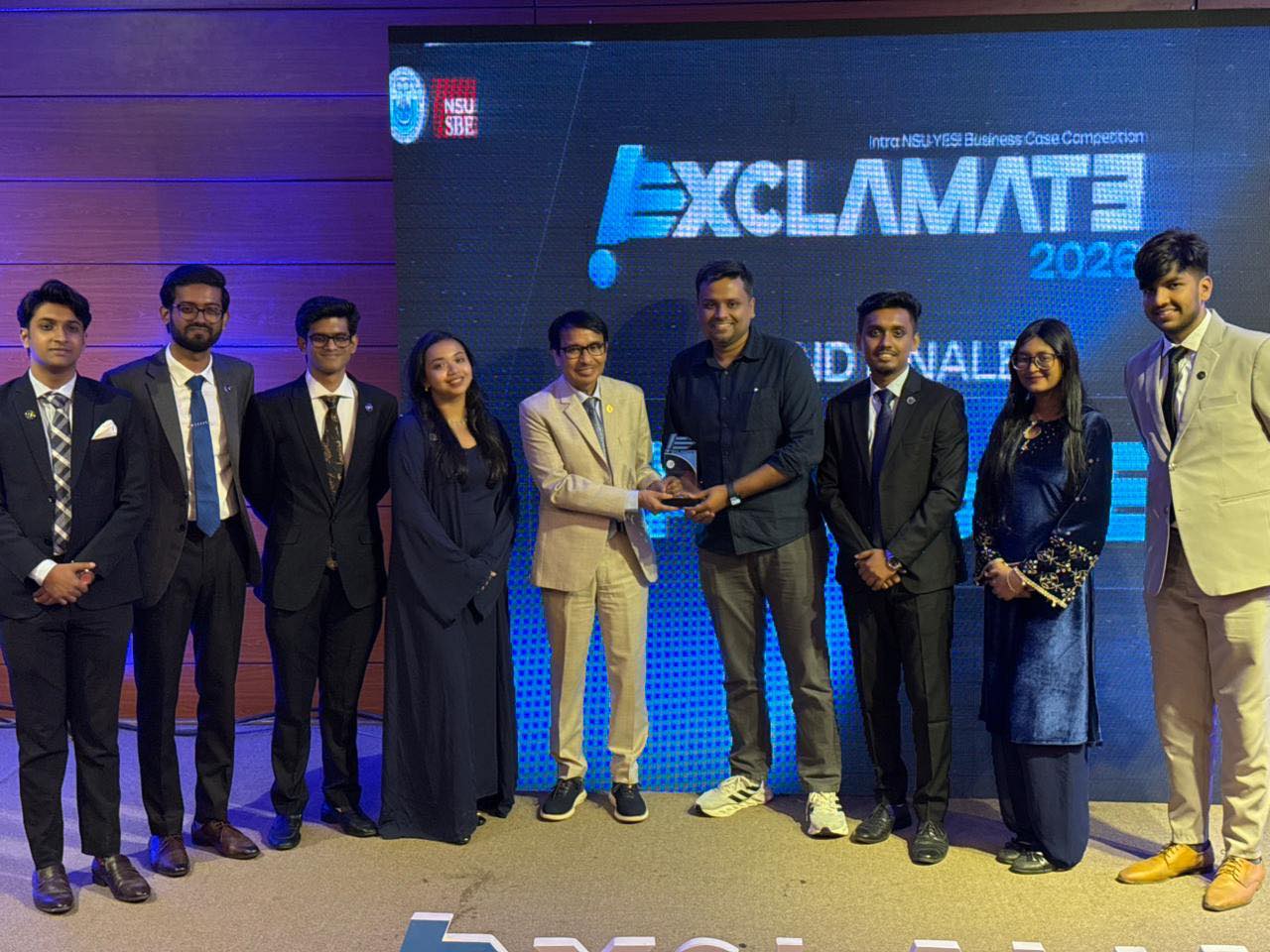
Our biggest highlight this month was Exclamate, the intra-NSU YES! business competition as an initiative of our member development programme. Watching participants step outside their comfort zones, pitch ideas, solve problems, and work under pressure was genuinely a proud moment for us. Beyond presentations and competition rounds, Exclamate became a reminder that growth often begins when we allow ourselves to take risks and explore ideas without fear of failure.
This theme of entrepreneurship, uncertainty, and growth continues throughout the edition. From the story of iFarmer and its impact-driven journey, to the discussion surrounding the growing pressure to become your own boss, the articles explore both the inspiration and challenges that come with modern entrepreneurship. We also look beyond campus and into the ongoing oil crisis in Bangladesh, a topic that continues to influence businesses, markets, and everyday lives around us.
I hope this edition feels less like a collection of articles and more like us thinking out loud together about ambition, pressure, and all the messy, exciting possibilities of our generation.
Happy reading.
Zarin Tasnim Mauli Rahman
President
NSU YES!
Exclamate: Where Ambition Met Competition
The Journey: Through Enlighten, Entail & Epilogue
Stepping into the realm of industries and businesses, theories only take us so far. But, for one to be subjected to a true test of knowledge, what reflects is their ability to execute and apply. In this fast paced epoch where having to stand out is the bare minimum – one only outshines when subjected to pressure, in real time with actual stakes on the line. NSU YES! has had a long standing motto, “Join. Experience.. Achieve” which roughly translates to the very principle and philosophy of this student-body which has it engraved within the mechanism to help foster the growth of its members in not just theory but with practicality.
“Exclamate 2025,” an intra – NSU YES! business case competition had its first iteration this year with the core idea of helping the members of the club learn how to execute, strategise and design solutions based on problems of an industry or a product. The competition wasn’t just merely a contest but a gauntlet served for the growth and development of its members. With 32 teams stepping into the arena this year, Exclamate was profoundly a showcase of the talent and the fire of ambition found expressively in the members of NSU YES!
Exclamate was an experience which was designed into three very specific rounds, every stage of which served a distinct purpose in the development of our members.
The first step – Enlightenment, where the teams were tasked with objectives which would help them learn and adapt to the foundational understanding of an industry, the business and how a case methodology usually works. Round 1 was where the participants were challenged to identify how the market and its target group audience is assessed and how to establish strategies which would be feasible in real-time execution. For a number of the participants, this was a stepping stone with how rigorously structured business case competition formats are and the decisiveness required to crack them. This round also served as a reminder to the participants that one must be the best to reach the next stage.
Moving on to the second stage – Entail, is where the bars were thereafter raised even higher. The participants, at this stage, were challenged to move beyond just the idea of identification but pushed into the process of analysis. The teams were tasked with analysing the complexities a business faces relevant to a specified industry having to map out data driven recommendations for the business to maneuver through and successfully attain the objective they had primarily outlined. It was at this round that the competition truly began to reveal its dormant character – that it was never just a test of theory but that of feasibility in the art of numbers and its critical analysis.
The final stage – Epilogue, had the competition brought to its apex with the participants faced with the highest of the stakes. The finalists were, at this curvature of their journey, tasked with the objective to devise a fully-jacketed 360o marketing campaign for a business specified to an industry which centers around consumer data and rapid shifts within the market. This round pushed the participants to their brim, where they learned that ideas do not just apply but they have to be scaled into the numbers compiled into road-map coined “strategy.” The triumphants finally blew and the winners took home not just their tags but a lesson, that the winner is who walks home with their hearts full of pride preparing for their next ride into yet another fight.
Why Member Development is Vital?
Intra-competitions, such as Exclamate, are not just incidental to the mission NSU YES! stands for but is rather central to the foundation of it. The North South University Young Entrepreneurs Society (NSU YES!) has always principled its idea into one core mission – to foster the development of its members into capable, confident and able leaders of tomorrow irrespective of whichever room they choose to step into. Business case competitions today are, in most ways, the close stimulation of having the professional capacity to make decisions that an undergrad student has the opportunity to access.
Such competitions create an environment where peers are taught to be collaborative,communicative, absorb knowledge, decode data, and have the right confidence to keep one’s composure even while under the tremendous pressure of their surroundings. Exclamate was not just a competition where the idea was only to complete a task but it served as a gateway for the members to learn how to be decisive and how to live up to the choices they have made.
A Memoir
For the members of NSU YES! and the participants of Exclamate 2026, will serve as the beginning to a new journey of what they aspire to be. The skills polished and the experience gathered from these rigorous three rounds beginning from structured thinking in Enlighten to the high-stakes presentation and campaign design of Epilogue – the competencies which distinguish a winner from any other have been well learnt and very well absorbed into the minds of the torchbearers of tomorrow.
But, also beyond the podium, Exclamate represented something more resounding, the very stage in life a young mind realises that could be so much more for they are exactly capable of all that they have ever imagined or dreamed of, “what I must be and what I could be.”
Exclamate 2026 stands as testament to the uncompromising resilience of the North South University Young Entrepreneurs Society to always be better and to ensure that tomorrow is always outshone by the presence of a YES!er.
- Written by
- Wasek Hossain
The Hormuz Shock In Bangladesh
How a Crisis Thousands of Kilometers Away is Disrupting Power, Production, and Daily Life in Bangladesh
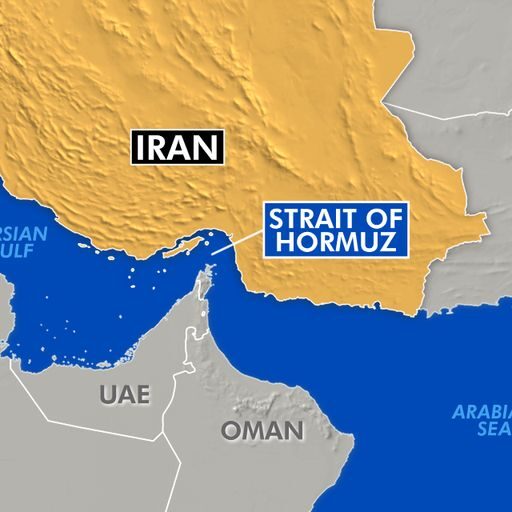
The conflict between Iran and the USA is sending shockwaves around the world, and we are feeling the tremors here in Bangladesh. On February 28, 2026, Iran closed the Strait of Hormuz after U.S. airstrikes hit its nuclear sites and killed Supreme Leader Ayatollah Khamenei. Within days, ships stopped moving through the waterway. While the world watched the military standoff, another crisis was quietly growing in Bangladesh, in our homes, workplaces, and on our roads.
Bangladesh does not buy oil or gas directly from Iran. However, about half of our LNG imports, around 3.6 million tonnes in 2025, travel through the Strait of Hormuz. Most of this comes from Qatar and the UAE, which also depend on that route. As the crisis unfolded, prices began rising quickly because, before any real shortage, shipping costs had already jumped. Very Large Crude Carriers (VLCCs) crossing the Strait saw their daily freight rates go up by 20 to 30 percent in just one week. Insurance costs also increased, pushing daily shipping expenses to $25,000 per vessel. For Bangladesh, this meant that oil and LNG from the Middle East became more expensive before they even landed here.
But what about the backbone of our economy? The Bangladesh Garment Manufacturers and Exporters Association (BGMEA) says production capacity has dropped by 25 to 30 percent, mainly because of gas and electricity shortages. With low regular and emergency reserves, we are less secure than our neighbors. For example, a spinning mill in Gazipur saw its daily output fall from 170 to 75 tonnes of yarn due to a shortage of energy, resulting in a daily loss of about Tk 25 lakh. Furthermore, the crisis is no longer just about numbers, it is affecting real jobs and factories. Across Bangladesh, around 45,000 mobile towers and several data centers depend on diesel generators during power cuts, but diesel is running low. Power outages are happening more often, not just in villages but also in big cities. Therefore, keeping networks running is getting harder, and the risks to emergency services are growing.
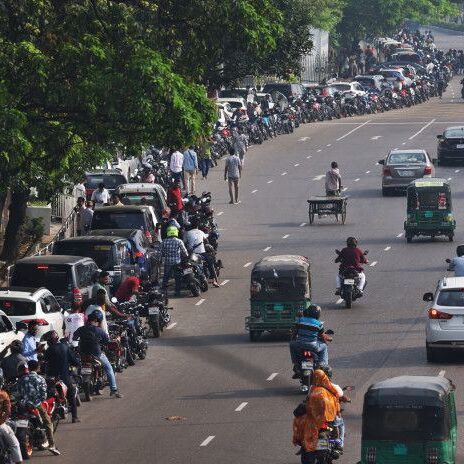
Cooking gas cylinders are getting more expensive. If workers in Middle Eastern countries lose their jobs because of the conflict, remittances to Bangladesh could fall. While people are hoping for relief, Iranian officials say the Strait will stay closed as long as the U.S. blockade continues. Some ships headed our way have also been intercepted. As a result, we are facing problems we were not ready for. Even though Bangladesh is not involved in the fighting, our energy supply, exports, networks, and family budgets are all suffering.
.
- Written by
- Fahmid Rafid
The Pressure to Be Your Own Boss
Why Everyone Suddenly Has to Work for Themselves
There was a time when success followed a clear structure. You entered a system, grew within it, and built a life around its stability. A job was not just income, but a framework; offering direction, routine, and a sense of progression that did not need constant questioning.
Today, that structure feels less certain. Not because it has disappeared, but because something else has taken its place. Success is increasingly defined not by where you work, but by whether you work for yourself. “Be your own boss” has shifted from advice to expectation.
At its core, the idea is compelling. It promises control—a life where effort translates directly into reward. For many, especially in evolving economies, this independence feels not just attractive, but necessary. And in many cases, it works. Entrepreneurship, freelancing, and creator-led work have opened real opportunities, allowing people to bypass traditional barriers. But the pressure surrounding them is equally real. Visibility has amplified outcomes growth, flexibility, financial gain while obscuring the process: instability, inconsistent income, and constant decision-making without guidance. Being your own boss is not just freedom; it is responsibility at every level.
Yet this distinction is often overlooked. The narrative simplifies a complex path, creating the impression that if you can build something, you should. Over time, possibility becomes expectation, reshaping how people evaluate their choices.
But this comparison is misleading. Not everyone thrives in uncertainty. Some prefer structure, collaboration, and defined roles; these are not limitations, but different ways of working. The issue is not entrepreneurship itself, but the narrowing definition of success. Being your own boss is valuable when it is a deliberate choice. It becomes exhausting when it feels like the only one.
What matters, then, is not whether you choose independence or structure, but whether that choice aligns with how you work and what you want from it. And that is something no trend can decide for you.
- Written by
- Adib Alman Ghafur
iFarmer and the Missing Links in Agriculture
The Conditions of Consistency
Seeds were planted, crops were harvested, and everything in between depended largely on experience, intuition, and access; access to money, to markets, to information. For many farmers in Bangladesh, that access was uneven. Not absent, but inconsistent enough to shape outcomes more than effort ever could.
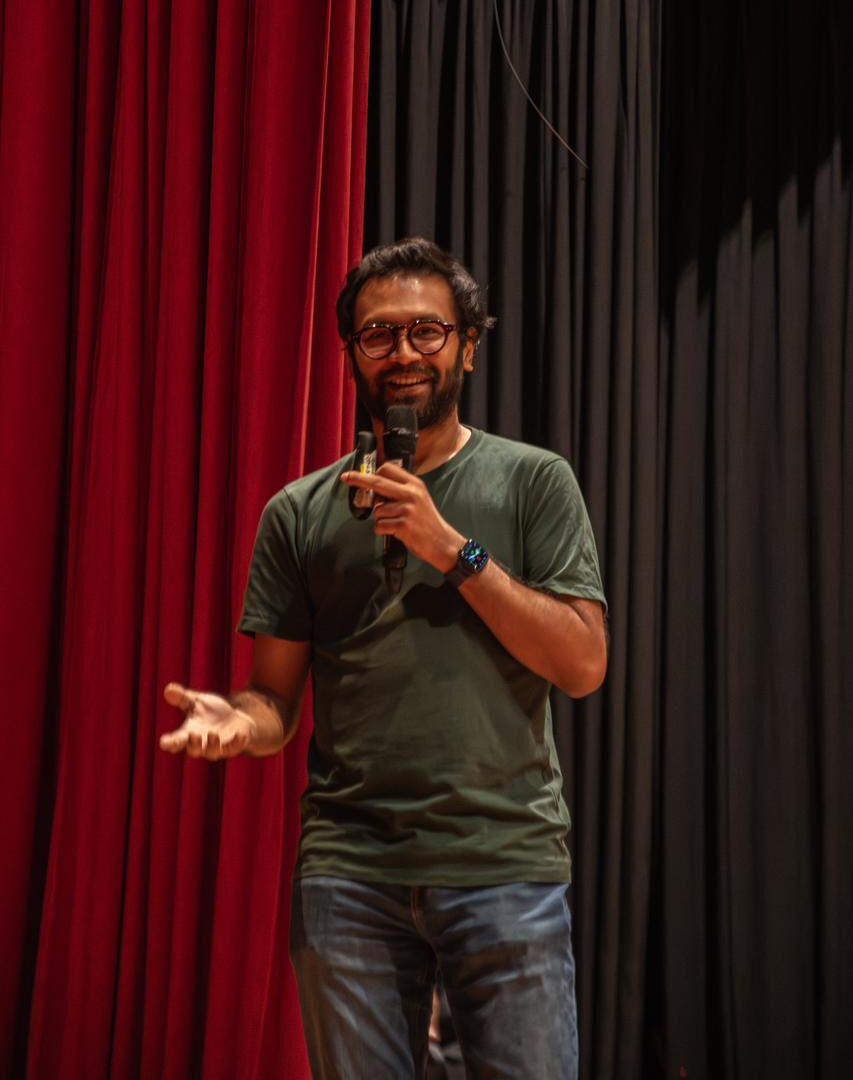
Rather than treating these limitations as separate problems, the company approaches them as part of a single system. Founded in Bangladesh, iFarmer connects farmers to financing, inputs, advisory support, and buyers through one platform. Co-founded by Fahad Ifaz, former President of NSU YES! (Fiscal Year 2008–2009), The company today works with over 300,000 farmers across more than 40 districts, facilitating large scale agricultural financing and support.
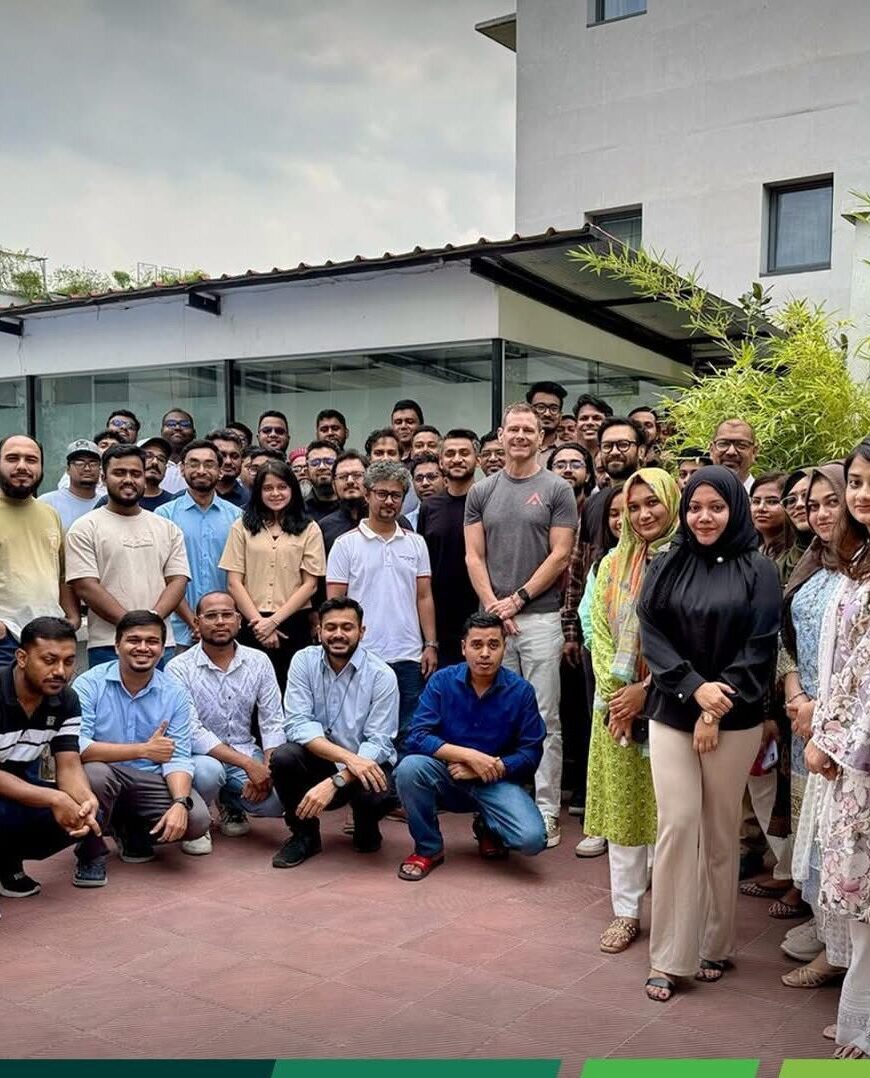
This integration changes how decisions are made at the farm level. Farming is no longer dependent on traditional collateral but on data collected through farmer activity and performance. That same system extends into input distribution and ongoing guidance, allowing farmers to move from isolated decisions to more informed, continuous ones.
The effect becomes clearer over time. When financing, inputs, and market access are aligned, outcomes begin to stabilize. Farmers are not just producing more; they are operating with greater predictability. The process, which once relied heavily on external uncertainty, becomes more structured without losing its flexibility.
This is where the shift becomes meaningful.
iFarmer does not redefine farming itself, but it reorganises the conditions around it. What was once fragmented, loans from one source, inputs from another, sales through intermediaries begins to function as a connected system. In 2026, iFarmer further strengthened this model by securing USD 1.5 million in its latest fund from Switzerland-based Symbiotics to reinforce the agricultural value chain.
And in that shift, the value is not just efficiency. It is coherence.
- Written by
- Adib Alman Ghafur
- Editor
- Ikramul Rahman
- Liana Shams
- Safat E Jannat
- Prionty Tasnim
- Raiyan Md Ahanf
- Rodela Nawar Matin
- Ariful Islam Mohsin
- Zarin Tasnim Mauli Rahman